Custom staircase by an interior designer
- Location: Linkebeek
- Objective: To correct a traffic problem with a central, functional, and aesthetically pleasing element
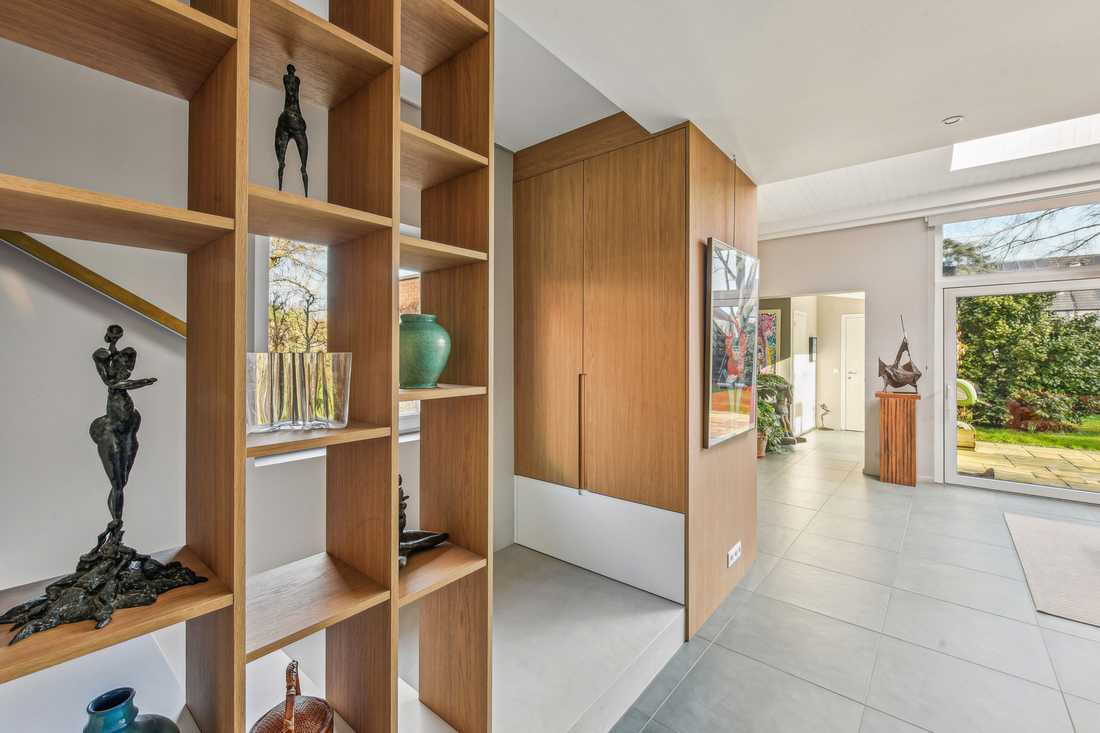
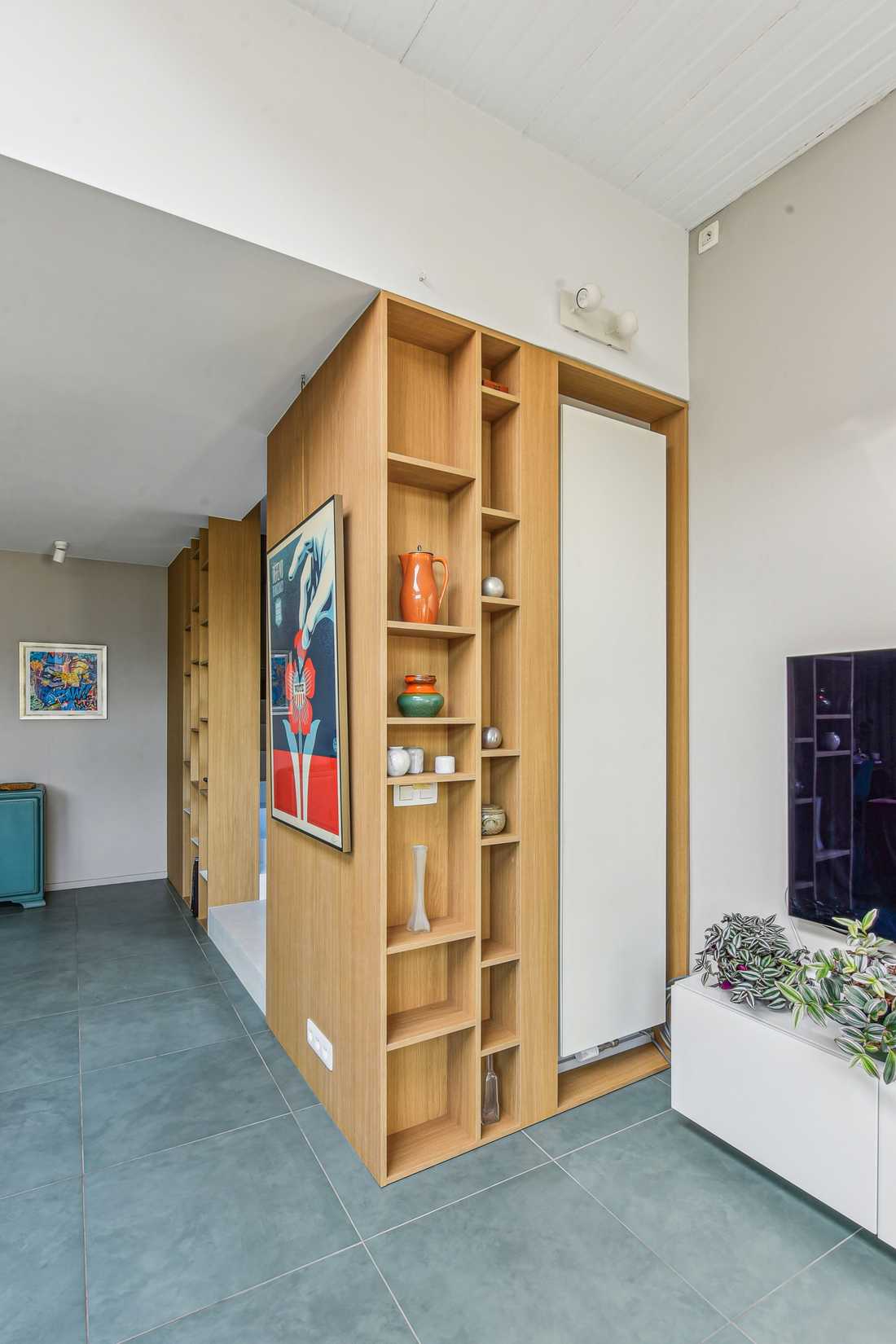
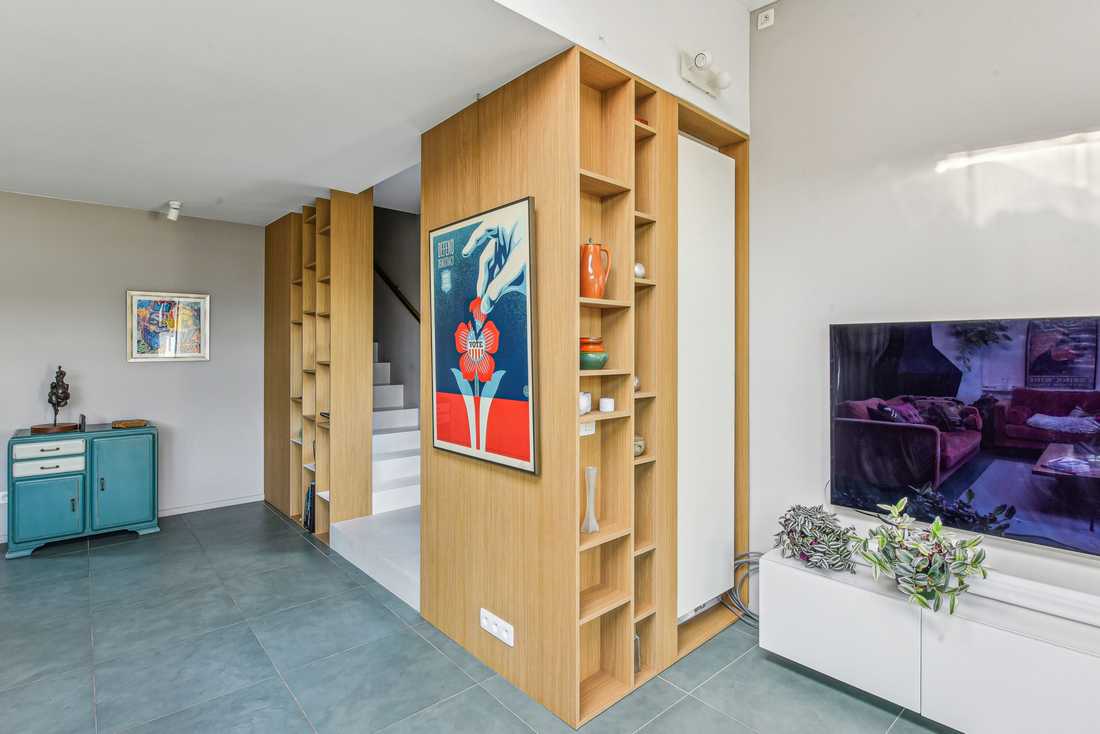
Après la réunion de trois maisons jointives en une seule habitation, les propriétaires faisaient face à un escalier inadapté, trop raide et mal intégré aux espaces de vie. Ils nous ont contactés pour repenser entièrement l’escalier de façon à en faire un élément central, fonctionnel et esthétique, améliorant la circulation et la luminosité.
Après la réunion des maisons mitoyennes, les propriétaires se sont retrouvés confrontés à une difficulté majeure : l’escalier. Faute de solution adaptée, ils avaient conservé un ancien escalier très incliné, accessible uniquement via la buanderie, peu pratique au quotidien et totalement déconnecté de la pièce de vie.
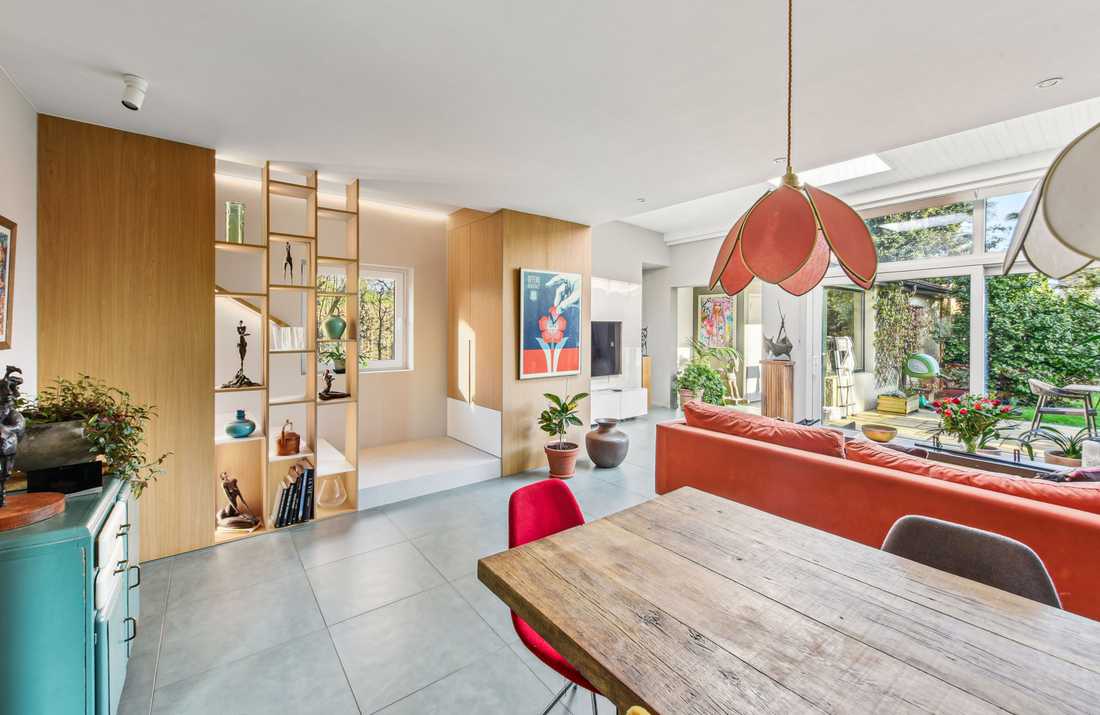
L’architecture d'intérieur a donc consisté à repenser entièrement cet élément afin d’en faire un véritable point central de la maison. Dessiné sur mesure, l’escalier a été conçu comme une pièce maîtresse, à la fois fonctionnelle et sculpturale, intégrée au cœur de l’espace de vie.
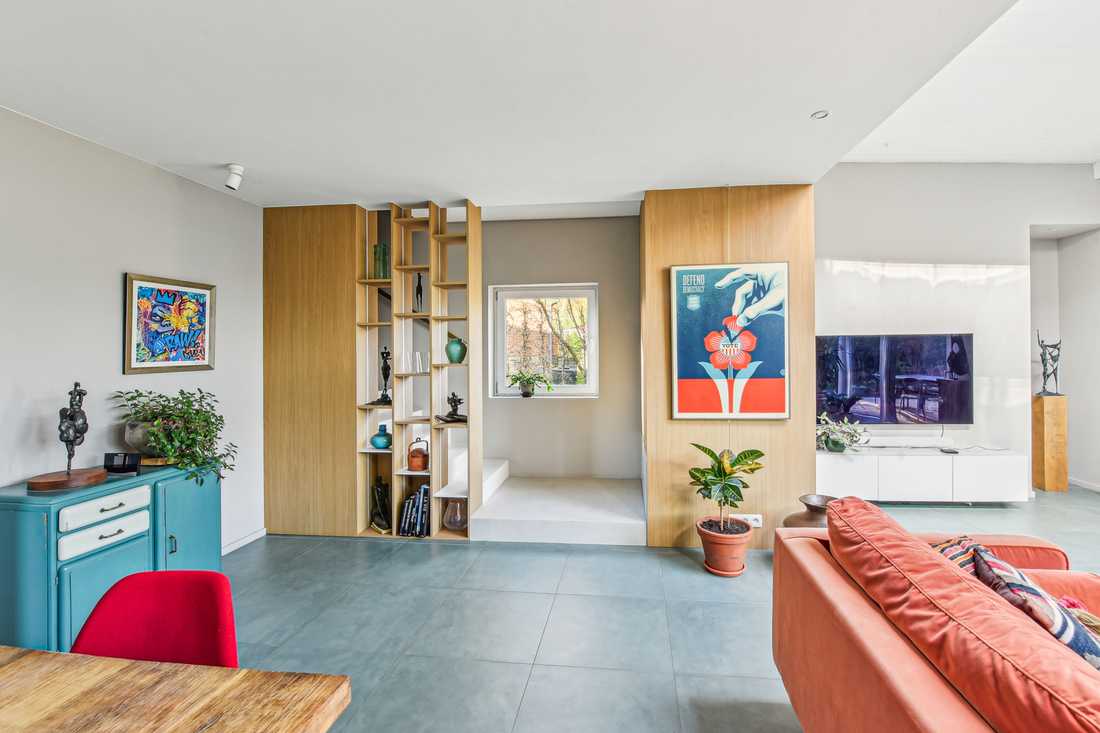
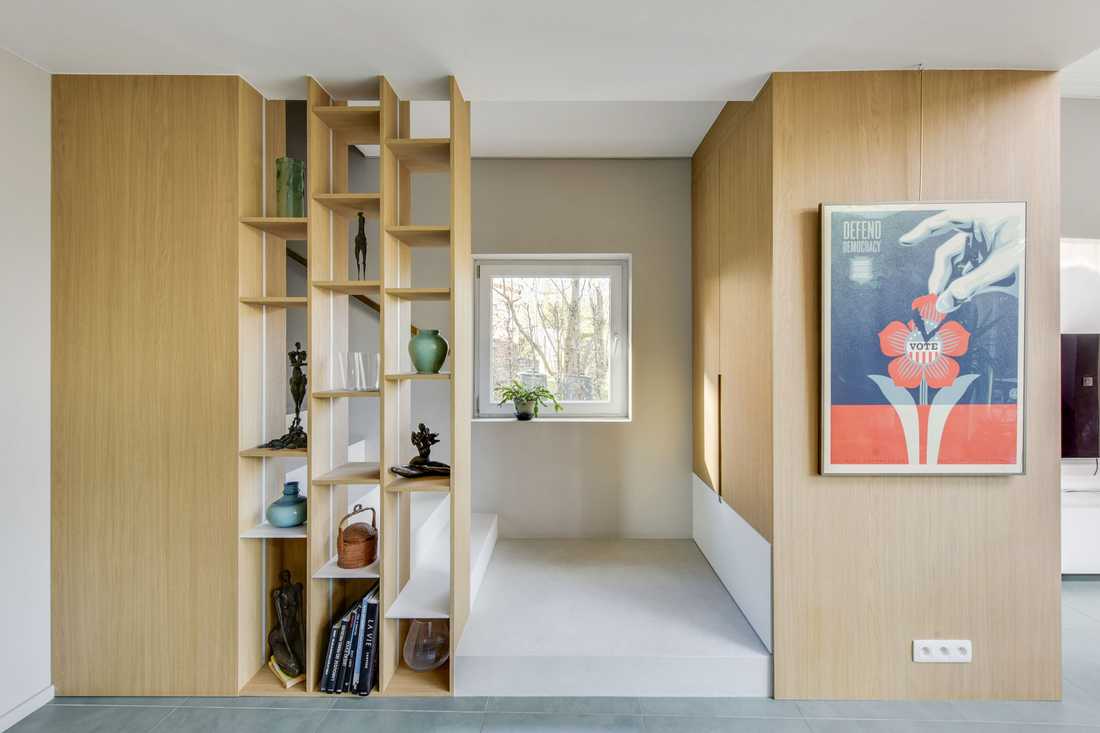
La première marche en béton ciré agit comme une invitation naturelle à emprunter l’escalier. En l’absence de hall d’entrée, un meuble vestiaire a également été intégré au pied de celui-ci, apportant une réponse pratique tout en structurant l’espace.
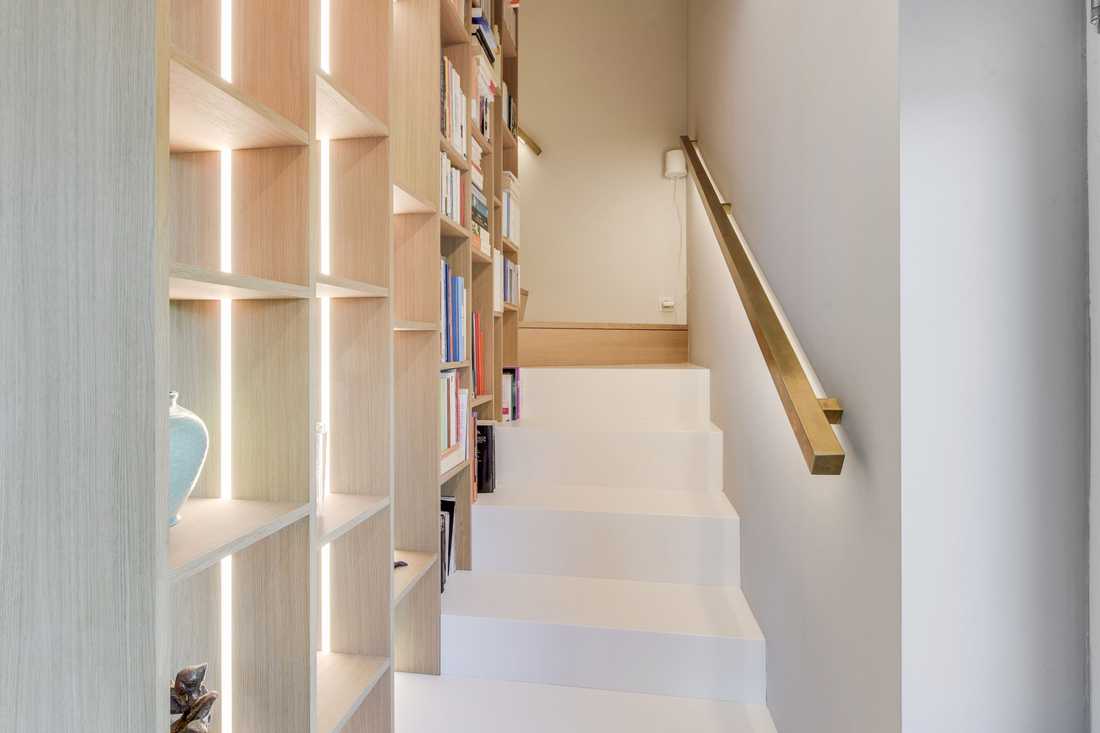
L’escalier se compose de plusieurs matériaux qui dialoguent harmonieusement : une première marche en béton ciré, une première volée en Corian, puis une seconde volée en chêne massif avec marches en Z, apportant rythme et légèreté.
Un autre enjeu important était le manque de luminosité dans cette zone centrale. Une main courante en laiton sur mesure, intégrant un rétroéclairage discret, vient souligner la ligne de l’escalier et ponctuer l’ensemble d’une lumière douce.
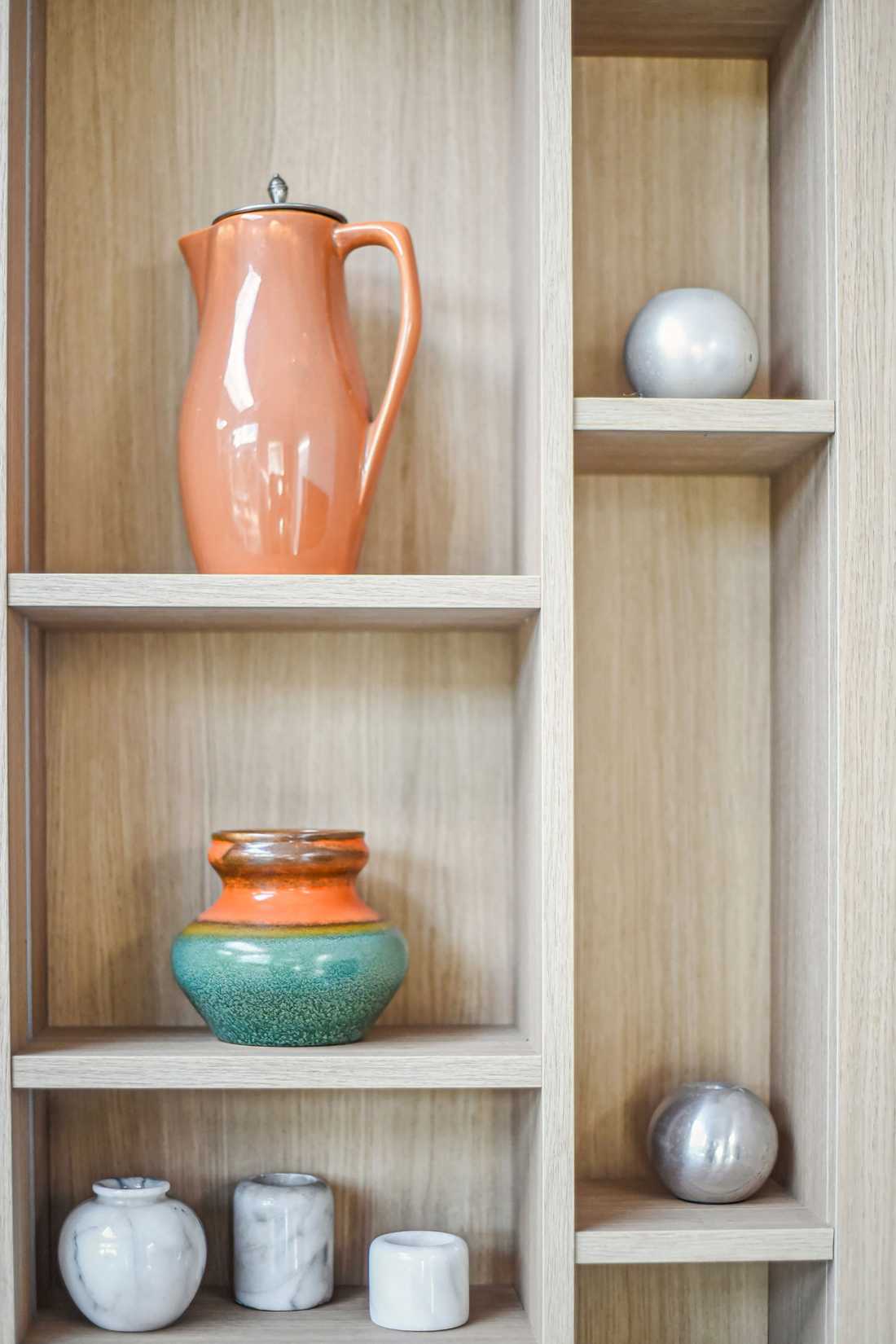
Enfin, une bibliothèque ouverte accompagne le mouvement, dans laquelle les marches viennent se fondre naturellement, renforçant l’idée d’un ensemble cohérent, pensé comme un seul et même objet architectural.
After merging three adjoining houses into a single residence, the owners were faced with an unsuitable staircase that was too steep and poorly integrated into the living spaces. They asked us to completely redesign the staircase so it could become a central, functional, and aesthetic feature, improving both circulation and natural light.
Following the merging of the houses, the owners encountered a major issue: the staircase. Lacking a suitable solution, they had kept an old, very steep staircase accessible only through the utility room, impractical for daily use and completely disconnected from the living space.
The interior design approach therefore consisted of fully rethinking this element to turn it into a true focal point of the home. Custom-designed, the staircase was conceived as a key feature, both functional and sculptural, integrated at the heart of the living area.
The first step, made of polished concrete, acts as a natural invitation to use the staircase. In the absence of an entrance hall, a cloakroom unit was also integrated at its base, providing a practical solution while structuring the space.
The staircase is composed of several materials that interact harmoniously: a first step in polished concrete, a first flight in Corian, followed by a second flight in solid oak with Z-shaped steps, adding rhythm and lightness.
Another key challenge was the lack of natural light in this central area. A custom-made brass handrail, incorporating discreet backlighting, highlights the line of the staircase and enhances the whole with a soft glow.
Finally, an open bookcase accompanies the movement, into which the steps blend naturally, reinforcing the idea of a cohesive whole designed as a single architectural object.


